Bloom’s Taxonomy

— Written By
en Español / em Português
Español

El inglés es el idioma de control de esta página. En la medida en que haya algún conflicto entre la traducción al inglés y la traducción, el inglés prevalece.

Al hacer clic en el enlace de traducción se activa un servicio de traducción gratuito para convertir la página al español. Al igual que con cualquier traducción por Internet, la conversión no es sensible al contexto y puede que no traduzca el texto en su significado original. NC State Extension no garantiza la exactitud del texto traducido. Por favor, tenga en cuenta que algunas aplicaciones y/o servicios pueden no funcionar como se espera cuando se traducen.


Português

Inglês é o idioma de controle desta página. Na medida que haja algum conflito entre o texto original em Inglês e a tradução, o Inglês prevalece.

Ao clicar no link de tradução, um serviço gratuito de tradução será ativado para converter a página para o Português. Como em qualquer tradução pela internet, a conversão não é sensivel ao contexto e pode não ocorrer a tradução para o significado orginal. O serviço de Extensão da Carolina do Norte (NC State Extension) não garante a exatidão do texto traduzido. Por favor, observe que algumas funções ou serviços podem não funcionar como esperado após a tradução.


English

English is the controlling language of this page. To the extent there is any conflict between the English text and the translation, English controls.

Clicking on the translation link activates a free translation service to convert the page to Spanish. As with any Internet translation, the conversion is not context-sensitive and may not translate the text to its original meaning. NC State Extension does not guarantee the accuracy of the translated text. Please note that some applications and/or services may not function as expected when translated.

Collapse ▲

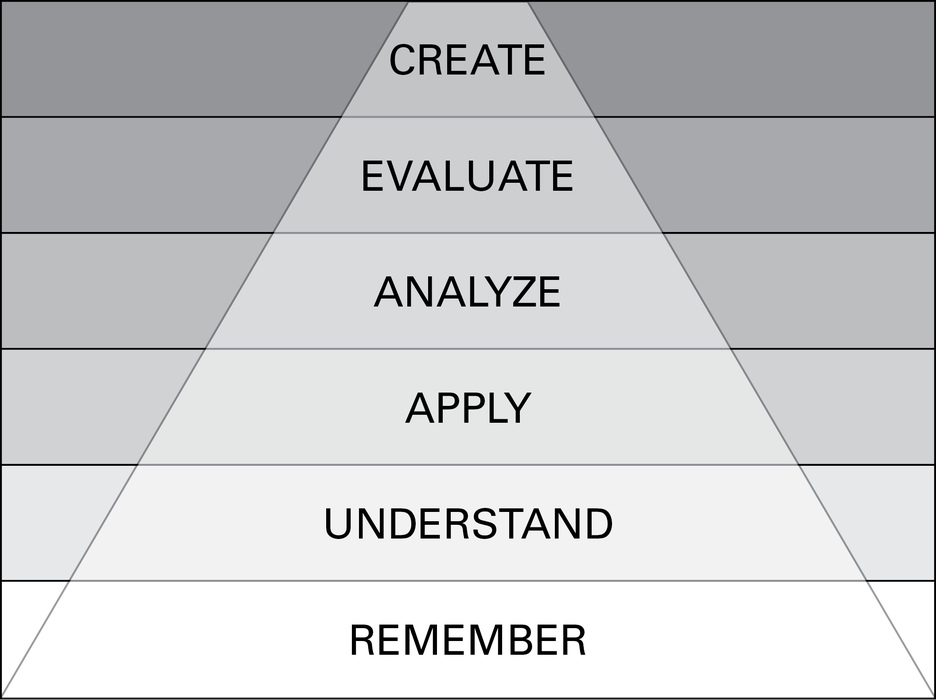
In our Extension education and training, Bloom’s Taxonomy can be used as a valuable guide for designing learning experiences that move audiences from basic understanding to practical application and innovation. 

bloom'sTaxonomy

It begins with remembering and understanding information that is often research-based and shared through programs in agriculture, food, nutrition, and youth development. The next step is applying, where participants use this knowledge in their fields, their businesses, or homes. Then analyzing and evaluating, as audiences assess outcomes, compare options, and make informed decisions that fit their local conditions. At the highest level is creating, where participants develop new solutions for their problems, adopt improved practices, or share what they have learned within their communities. 

Through this process, we can better design educational programs and training projects that bridge university research with real-world action, turning knowledge into lasting community impact through Extension’s effort.

Written By

Alta Zhang, N.C. Cooperative ExtensionAlta ZhangInstructional Designer Call Alta Email Alta Extension Information Technology
NC State Extension, NC State University
Posted on Dec 4, 2025
Was the information on this page helpful? Yes check No close
Scannable QR Code to Access Electronic Version